What Is a Customer? The Difference Between Customer, Consumer, Buyer, and Client
The words customer, consumer, buyer, and client get used as if they mean the same thing, but treating them as interchangeable leads to the wrong message, the wrong pricing, and the wrong kind of support. A customer is anyone who buys a product or service from a business. This guide defines the term, shows exactly how it differs from the related words, and explains why the distinction changes how you sell and serve.
What Is a Customer?
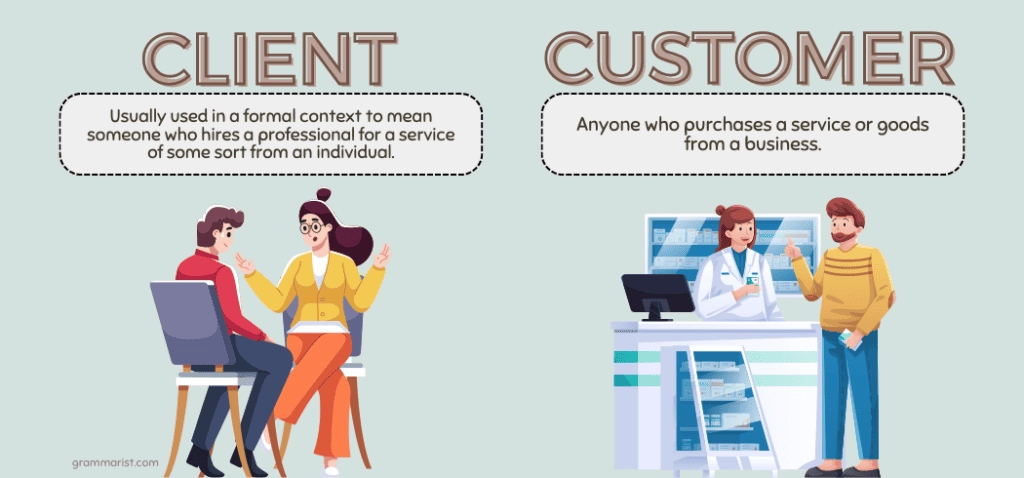
A customer is a person or organization that buys goods or services from a business, whether once or repeatedly.
The defining act is the purchase, nothing else. A customer does not have to use the product, decide on it alone, or stay loyal. They simply pay. Because that definition is so broad, "customer" is the umbrella term the other three words sit underneath, each adding a specific detail the general word leaves out.
- One-time customer: Buys once and may never return, such as a tourist buying a souvenir.
- Repeat customer: Comes back for more purchases, forming the profitable core of most businesses.
- Internal customer: A team inside the same company that depends on another team's output, common in larger organizations.

Customer vs Consumer vs Buyer vs Client (Comparison Table)
The four terms differ on three things: who pays, who uses the product, and how long the relationship lasts. The table below sets them side by side.
| Term | Defining role | Relationship | Typical example |
|---|---|---|---|
| Customer | Pays for the product or service | One-off or ongoing | Anyone who buys from a shop |
| Consumer | Uses or consumes the product | Not always the payer | A child eating cereal a parent bought |
| Buyer | Makes the purchase decision | Focused on the transaction | A procurement manager approving an order |
| Client | Buys ongoing professional services | Long-term, trust-based | A company retaining a law firm |
What Is the Difference Between a Customer and a Consumer?
A customer buys the product, while a consumer is the one who actually uses it, and the two are frequently different people.
This gap is where marketing budgets are won or lost. When a parent buys cereal for their child, the parent is the customer you must convince to pay, but the child is the consumer whose taste decides whether it gets bought again. Pet food is sold to owners but consumed by animals; children's toys are chosen by parents but used by kids. The practical lesson is that you often have to sell to one audience and design the product experience for another, and confusing the two means aiming your message at the wrong person.
What Is a Buyer?
A buyer is a customer viewed at the moment of the transaction, the person making the decision to purchase.
In everyday retail, buyer and customer mean the same thing. The distinction becomes real in business-to-business sales, where the buyer is often a dedicated procurement role who is not the end user at all.
For example, a company's IT buyer may sign off on software that the marketing team actually uses, which means the person you must persuade to purchase is different from the person who has to be happy with the product. Recognizing that split tells you whether to lead with price and terms (for the buyer) or ease of use (for the user).

What Is a Client?
A client is a customer who buys ongoing, professional, or advisory services, usually within a longer relationship built on trust.
The word signals depth, not just a transaction. A law firm, an accountant, a marketing agency, or a consultant serves clients because the work is continuous, personalized, and dependent on trust built over time. Losing a client costs far more than losing a one-time customer, so client relationships justify dedicated account management, regular check-ins, and tailored advice.
The shift from "customer" to "client" usually marks a shift from selling a product to managing a relationship. Handling many client accounts well often depends on clear internal structure, which this guide to managing customer support permissions covers in detail.
Why Does the Difference Matter for Your Business?
Knowing which term applies changes how you communicate, price, and support each person, because their expectations are genuinely different.
- Tone and messaging: A one-off buyer wants speed and a clear price, while a long-term client expects personalized advice and attention.
- Product versus experience: Selling to a customer who is not the consumer means designing for both the payer and the user at once.
- Retention strategy: Clients are kept through relationships and service quality, while occasional customers are won back through reminders and offers.
- Where you invest: Serving buyers points you toward efficient transactions, while serving clients points you toward long-term account care.
Whatever the type, every one of these people expects a fast, informed reply when they reach out, which is why many businesses now lean on AI bots for customer service to respond instantly regardless of who is asking.
How Do You Serve Every Customer Type Well?
You serve them well by recognizing which type each person is and adjusting your response, which is only possible when you can see each customer's history in one place.
At small scale you can hold that context in your head. As messages grow across WhatsApp, Instagram, and other channels, it becomes hard to tell a first-time buyer from a returning client without a shared record. A shared platform such as SaleSmartly keeps each customer's full history and tags in one inbox, so a quick buyer gets a fast answer and a valued client gets the attention they expect.
Talk to the SaleSmartly team on WhatsApp to see how.
Conclusion
Customer, consumer, buyer, and client describe overlapping but distinct roles. A customer buys, a consumer uses, a buyer decides at the point of sale, and a client engages in an ongoing professional relationship. The customer is the umbrella term, and the others sharpen it by pointing to who uses the product, who makes the decision, and how long the relationship lasts.
The distinction is practical, not academic. It tells you who to convince, what to emphasize, and how much to invest in keeping each person, so matching your effort to the right role is what makes your selling and service land. To go further, this overview of what AI customer service can do is a useful next read.
FAQ
What is the difference between a customer and a consumer?
A customer buys the product, and a consumer uses it. They are often the same person, but not always. A parent buying toys is the customer, while the child playing with them is the consumer. The distinction matters because businesses frequently sell to one person while designing the actual experience for another.
Is a client the same as a customer?
All clients are customers, but not all customers are clients. "Client" usually refers to someone who buys ongoing professional or advisory services, like the clients of a law firm or agency, within a longer relationship built on trust. "Customer" is broader and includes anyone who buys, including one-time purchases.
What is a buyer?
A buyer is a customer at the moment of purchase, the person making the buying decision. In everyday retail it means the same as customer. In business-to-business settings, a buyer is often the person formally responsible for procurement, who evaluates options and approves the purchase, so the term highlights the decision rather than the ongoing relationship.
What Does Follow Up Mean? How to Follow Up With Customers Effectively
What does follow up mean, why does it matter, and how do you follow up with customers effectively? A clear guide with methods and message examples.
How to Chat on WhatsApp Without Saving the Number (for Businesses and CS Teams)
How to chat on WhatsApp without saving the number, from the wa.me link and QR trick to the business tools that let a whole CS team do it at scale.
