What Is a CRM System and How Does It Actually Work?
Sales, marketing, and support teams running on spreadsheets and email threads hit adoption limits fast, and a CRM system replaces those manual tools with one central database every team writes to and reads from. This guide covers what a CRM system is, how it works layer by layer, the main deployment types, whether the investment pays off, common implementation challenges, and the top 5 CRM platforms for Indonesian businesses.
Key Takeaways
- A CRM system is a centralized software platform that stores customer data, tracks interactions, and automates sales, marketing, and support tasks in one place.
- CRM systems fall into cloud-based, on-premise, hybrid, and industry-specific deployment models, with cloud dominating the Indonesian SMB market.
- Indonesian businesses increasingly favor CRM systems with native WhatsApp Business API and Instagram DM integrations, since audiences reach brands mainly through chat channels.
What Is a CRM System?
A CRM system, also called a CRM management system or CRM information system, is a centralized software platform that stores customer data, tracks every interaction across sales, marketing, and support, and automates workflows around that data.
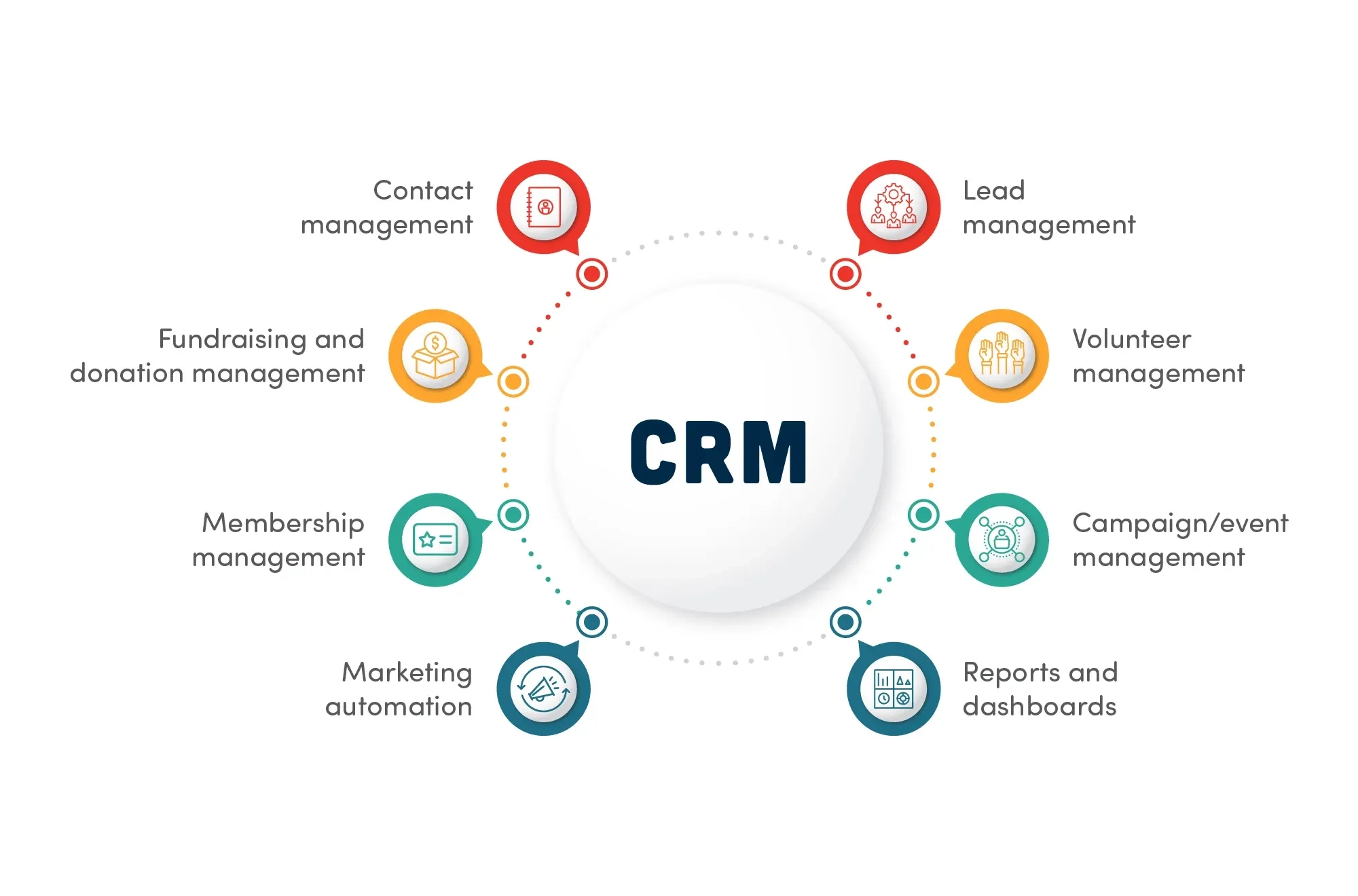
What Does a CRM System Do?
A CRM system works by pulling customer data from every source into one shared database, then layering functional capabilities on top for sales, marketing, and support teams. Most modern platforms run on five connected layers:
- Contact Management & Central Database: The system captures customer details from web forms, chat platforms, email, phone calls, ecommerce integrations, and imported spreadsheets. Each record holds identifiers like name, phone, email, company, and custom fields, with automatic deduplication so the same person shows up once even when data enters from different sources.
- Sales Pipeline & Workflow Automation: The CRM tracks each deal through named stages (New Lead, Qualified, Proposal Sent, Negotiation, Closed Won) with owner assignment, expected close dates, and deal value. Automation rules move deals between stages, assign follow-up tasks, and send notifications when a deal goes stale.
- Marketing Campaign & Segmentation Engine: The system builds dynamic segments based on behavior, purchase history, or lifecycle stage, then triggers personalized email, chat, and ad campaigns. This capability powers most modern CRM marketing programs.
- Customer Support & Ticketing System: Support tickets from email, chat, or web forms enter one shared queue with automatic routing based on issue type, agent skill, or SLA priority. Every ticket links back to the customer record, so agents see the full purchase and interaction history when responding.
- Analytics Dashboard & Reporting: Real-time dashboards summarize pipeline health, revenue attribution, customer lifetime value, agent performance, and campaign ROI. Leadership uses these reports to defend budget, spot bottlenecks, and decide where to invest.
Types of CRM Systems
CRM systems are usually classified by deployment model, since the functional focus (operational, analytical, collaborative) typically spans across deployment types. The four main types cover different tradeoffs in cost, data control, and setup complexity.
| Type | Deployment | Best Fit For | Typical Platforms |
|---|---|---|---|
| Cloud-based CRM | Hosted by vendor, accessed via browser | SMBs wanting fast setup and low upfront cost | HubSpot, Zoho, SaleSmartly, Mekari Qontak |
| On-premise CRM | Installed on the company's own servers | Large enterprises with strict data control needs | Salesforce (self-hosted), Microsoft Dynamics 365 On-Premise |
| Hybrid CRM | Mix of cloud and on-premise components | Regulated industries balancing cloud speed with data residency | Custom implementations, industry-specific systems |
| Industry-specific CRM | Purpose-built for one vertical | Banking, insurance, healthcare, real estate | HashMicro (manufacturing), specialized banking systems |
Cloud-based CRM dominates the Indonesian SMB market since it removes the IT infrastructure requirement and works from any device with a browser. Many cloud CRM systems also offer omnichannel CRM capabilities that unify WhatsApp, Instagram, TikTok, and email into one inbox, which fits how Indonesian audiences actually shop.
Meanwhile, on-premise CRM systems suit only large enterprises with dedicated IT teams, while hybrid setups appear mainly in banking and insurance, where regulators require some customer data to stay on-shore. Industry-specific CRM systems make sense when standard platforms cannot handle unique workflows, such as insurance policy administration or healthcare patient records.
Is a CRM System Worth the Investment?
Yes, for any business with a growing customer base, sales team, or multi-channel support operation. A CRM system delivers measurable revenue lift, better retention, and time savings through automation, but only when the team commits to using it as the single source of customer truth. Without clear ownership, businesses invest in costly CRM systems while continuing to run daily operations through spreadsheets, adding expense without improving ROI.
The results SMBs see once a CRM system is in place include:
- Higher sales productivity: Automation of task assignment, follow-up scheduling, and quote generation frees sales reps to focus on active deals. Salesforce research cited by Statista shows sales productivity increases of 34% for teams using CRM.
- Better customer retention: Segmentation and behavior triggers make it possible to reach out with something relevant at the right moment, which lifts retention rates by 27% on average according to IBM data.
- Real revenue attribution: Dashboards tie each dollar of marketing spend and each sales rep's activity back to closed revenue, so leadership stops guessing where growth actually comes from.
- Reduced time on repetitive tasks: Marketing teams save 10-15 hours per week on list building, email personalization, and campaign reporting once the CRM automates these workflows.
- Data-driven forecasting: Pipeline data plus historical conversion rates produce revenue forecasts that finance teams can actually use, so planning becomes tighter and cash flow more predictable.
For SMBs, a mid-tier CRM system runs between Rp 250,000 and Rp 900,000 per user per month for the software alone. Implementation costs run another Rp 35-270 juta for setup, integration, and data migration, staff training runs 20-40 hours per user, and SSO tiers can double the price for teams that need enterprise security. Total first-year cost for a 10-person team lands between Rp 100 juta and Rp 500 juta depending on complexity.
CRM System Implementation Challenges
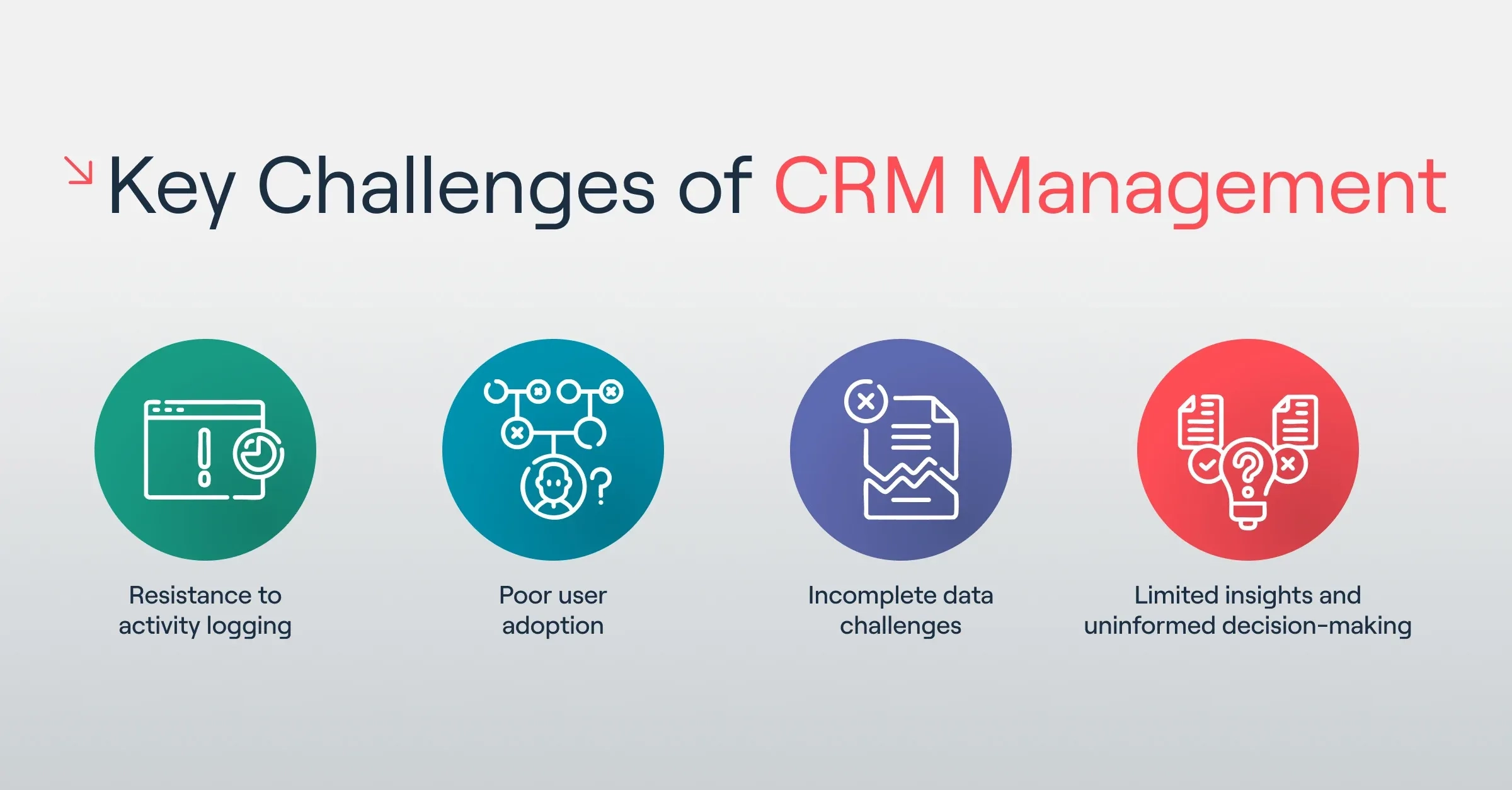
CRM system implementations rarely fail because of the software choice. They fail on adoption, data quality, and integration. Marketing leads on r/CRM point out that around 50% of CRM projects miss their goals for these reasons, so knowing the traps in advance matters.
- Low user adoption: Sales reps and support agents avoid entering data when the CRM feels slow or disconnected from their daily tools. The fix is running the CRM on top of the platforms the team already uses, such as email, WhatsApp, and the ticketing tool.
- Data quality and migration: Duplicate records, incomplete fields, and stale contacts inherited from spreadsheets crash new campaigns immediately. Plan for 4-8 weeks of data cleanup before migration, since dirty data cannot be fixed after the fact.
- Integration complexity: The CRM system needs to connect with the CRM software stack already in use, including ecommerce platforms (Tokopedia, Shopee, Lazada), messaging tools (WhatsApp Business API), payment gateways (Xendit, Midtrans), and analytics platforms. Native integrations save weeks of custom development.
- Cost creep from SSO and add-ons: Vendors often price SSO, advanced analytics, and API access as premium add-ons. For a team of 20, these add-ons can double the annual subscription cost, so model the full cost of ownership before signing.
- Change management resistance: Long-tenured staff often see new CRM systems as extra work with unclear benefits. Involving them early, showing the CRM tracking their own KPIs, and pairing rollout with a workflow review turns resistance into ownership.
Top 5 CRM Systems for Indonesian Businesses
The best CRM system for an Indonesian business depends on team size, chat channel mix, budget, and regulatory needs. The five platforms below consistently appear in Indonesian SMB shortlists, mixing local omnichannel leaders with global mid-market cloud tools.
| Platform | Best For | Key Strength | Deployment |
|---|---|---|---|
| Mekari Qontak | Local SMBs needing WhatsApp + tax compliance | Native WhatsApp integration + Indonesian tax integration | Cloud |
| Zoho CRM | Indonesian SMBs wanting a full software suite | 40+ Zoho apps under one bundle | Cloud |
| HubSpot CRM | Teams wanting a free tier with growth path | Deep marketing tools built in | Cloud |
| Pipedrive | Sales-driven Indonesian B2B teams | Visual sales pipeline reps actually use | Cloud |
| SaleSmartly | Chat-led SMBs in SEA on WhatsApp, IG, TikTok | CRM record built from chat conversations | Cloud |
Mekari Qontak
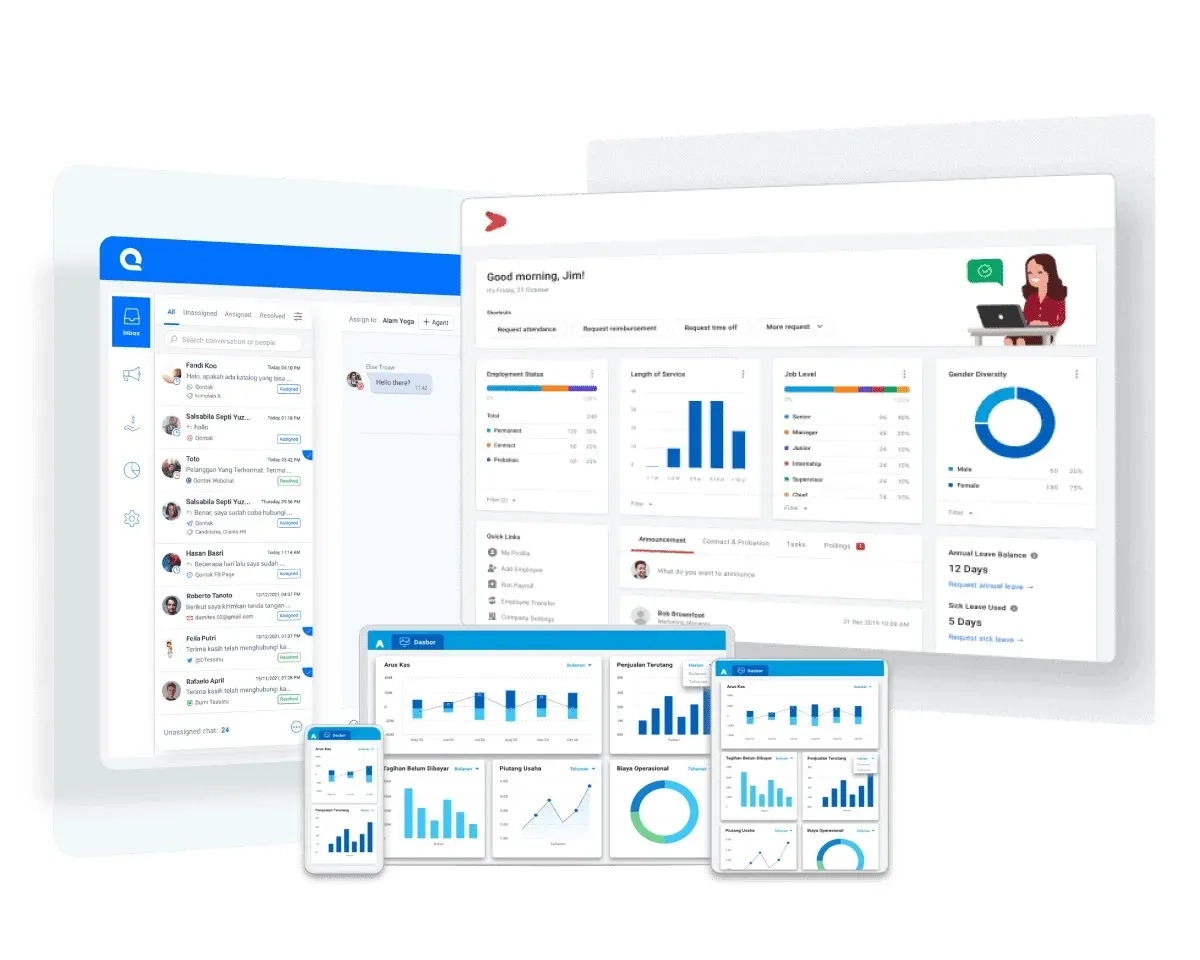
Mekari Qontak is one of the most popular local CRM systems in Indonesia, especially for SMBs that need native WhatsApp Business API integration alongside local tax and regulatory features. The system covers sales pipeline, ticketing, and marketing automation with a strong focus on omnichannel chat management.
- Strengths: Native WhatsApp CRM, GPS field-sales tracking, Indonesian language interface, and local tax integration.
- Limitations: Best fit for teams already committed to the Mekari ecosystem, since interoperability with global tools requires custom integration work.
Zoho CRM
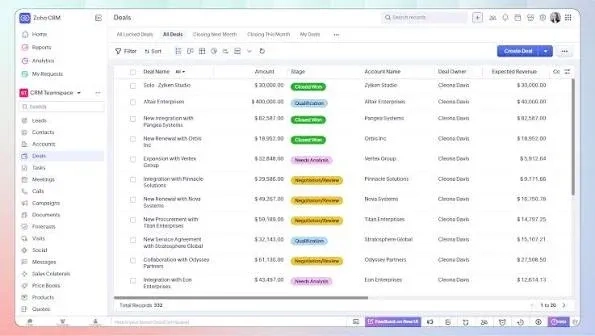
Zoho CRM sees wide adoption across Indonesian SMBs for its affordability and modular structure. The Zoho One bundle gives teams access to CRM plus 40+ other business apps under one subscription, which reduces total software spend for growing businesses.
- Strengths: Affordable entry pricing, extensive customization, strong workflow automation, and the Zoho One bundle value.
- Limitations: Interface feels dated compared to newer competitors, and localization for Indonesian tax or payment gateways requires third-party add-ons.
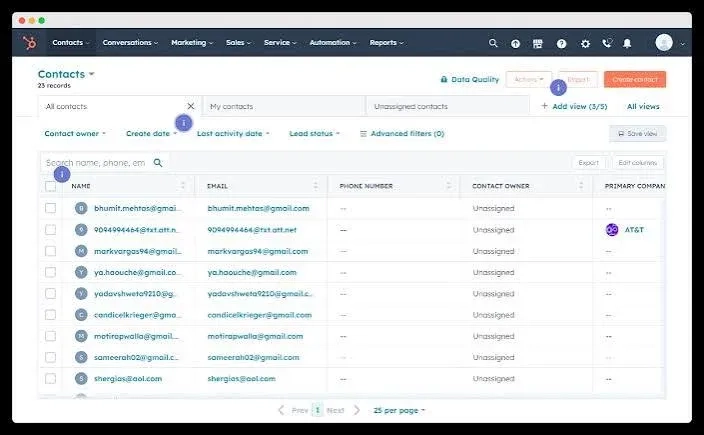
HubSpot CRM
HubSpot CRM is the platform most Indonesian SMB founders test first thanks to the free forever tier that covers contact management, pipeline tracking, and basic reporting. The paid tiers unlock deeper marketing, sales, and service tools.
- Strengths: Free tier removes the risk of trying CRM, strong marketing and content tools, and native integration with 1,500+ apps.
- Limitations: Paid tiers get expensive quickly for larger teams, with HubSpot Professional starting around Rp 21 juta per month for 5 users.
Pipedrive
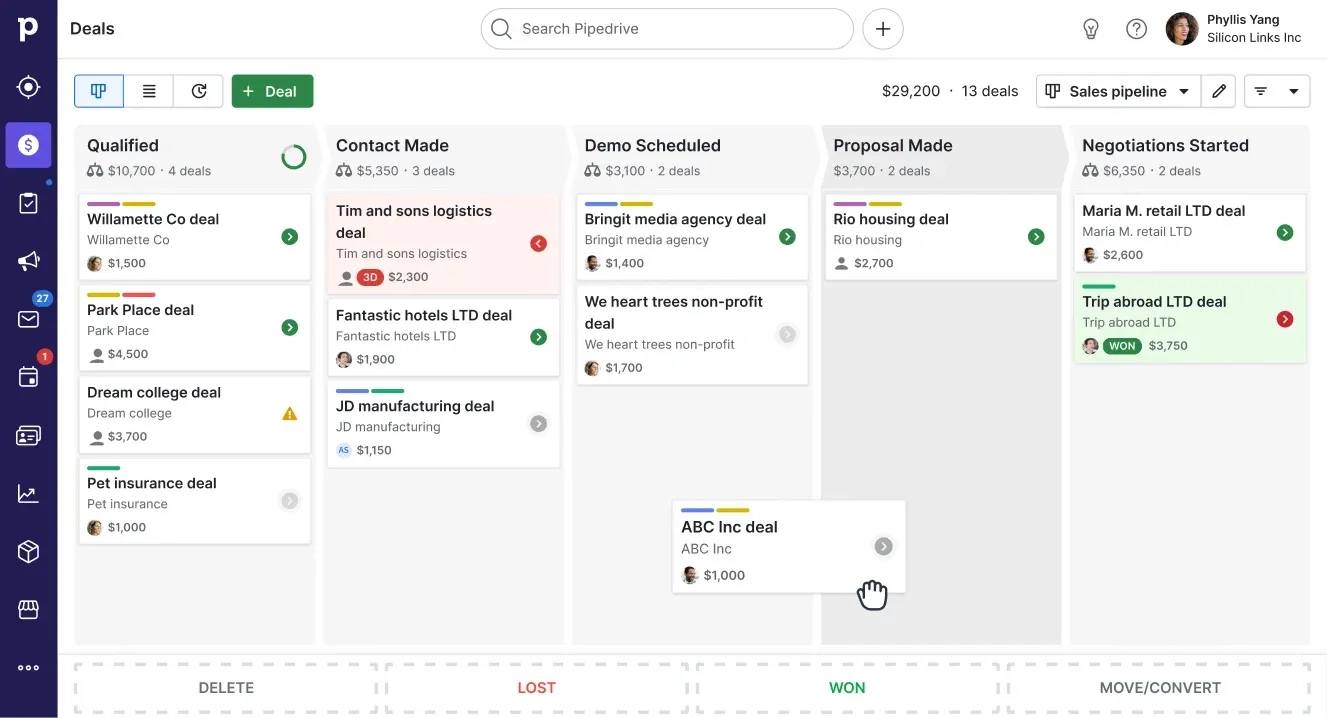
Pipedrive is a sales-focused CRM system built by sales reps for sales reps. The visual kanban pipeline keeps deals moving forward, and the interface stays simple enough that lean teams adopt it in days.
- Strengths: Visual drag-and-drop pipeline, straightforward deal tracking, and email integration with two-way sync.
- Limitations: Weaker marketing automation and support ticketing compared to HubSpot or Zoho, so growing teams often outgrow it once they need multi-channel coverage.
SaleSmartly
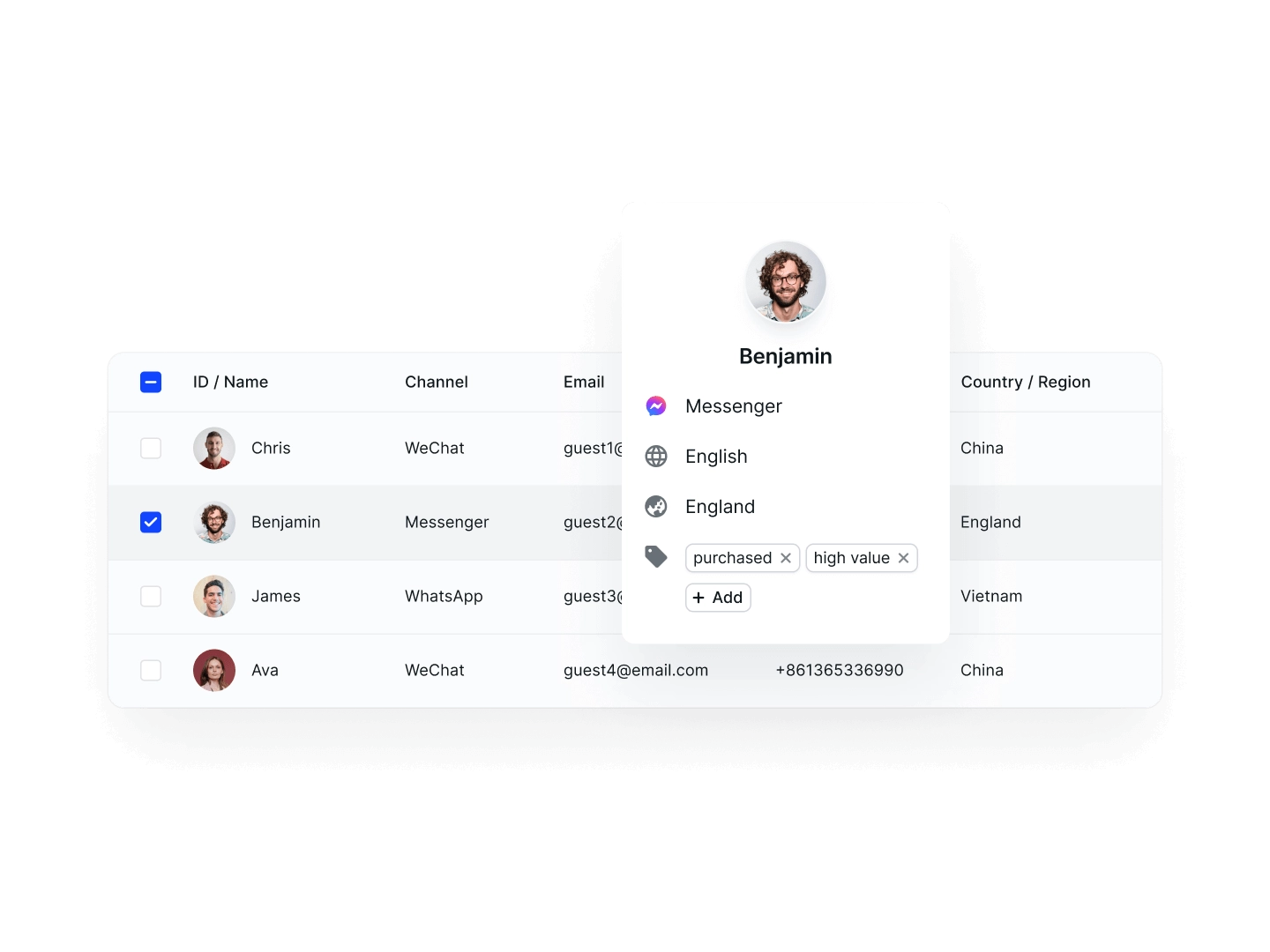
SaleSmartly is a chat-led CRM system built for Indonesian and Southeast Asian SMBs whose customers reach them through WhatsApp, Instagram, TikTok, and other messaging channels. The CRM record is built directly from those conversations, so the sales pipeline and support history stay grounded in what customers actually said.
- Strengths: Unified inbox for WhatsApp Business API, Instagram DM, TikTok, Facebook Messenger, LINE, and email. Contact records auto-build from chat channels with full conversation history attached. Built-in AI chatbot handles after-hours coverage and first-response qualification.
- Limitations: Not a full traditional sales-forecasting CRM (HubSpot or Pipedrive fit better there), and not a specialized banking or insurance system.
Centralize your customer data with SaleSmartly, the chat-led CRM system built for SMBs in Southeast Asia whose audiences live on WhatsApp.
Frequently Asked Questions
What is a CRM system meaning?
A CRM system means a customer relationship management software platform. It stores customer data, tracks every touchpoint across sales, marketing, and support, and automates workflows around that data. The system acts as the single source of customer truth for every team that talks to customers.
What is a CRM information system?
A CRM information system is another name for a CRM system, with the term commonly used in academic and enterprise IT contexts to emphasize the information management aspect. It refers to the same software category that stores customer records, transaction history, communication logs, and analytics dashboards in one connected database accessible to sales, marketing, and support teams.
Are CRM systems easy to implement?
Yes, for entry-level cloud CRM systems like SaleSmartly, which SMB teams can set up and use within a day. Enterprise CRM systems like Salesforce or Microsoft Dynamics 365 have steeper implementation cycles ranging from 2 to 6 months and often need certified consultants to configure.
How much does a CRM system cost?
CRM system pricing ranges from free (HubSpot Free, Zoho CRM Free for up to 3 users) to Rp 2,7 juta+ per user per month for enterprise platforms. Most Indonesian SMBs land in the Rp 250,000 to Rp 900,000 per user per month range, plus one-time implementation costs between Rp 35 juta and Rp 270 juta depending on complexity.
What Is CRM and How Does It Help Businesses Grow? A Complete Strategy
Discover what CRM means, how it works, the 3 main types, and how small-to-mid-sized businesses in Southeast Asia choose the right platform for chat-led growth.
What Is Omnichannel CRM? A Complete Explanation for 2026
Discover what omnichannel CRM is, how it works, and how to choose the right platform to unify your customer conversations across every channel.
