Chatbots in Real Estate: What It Is? Its Role? Do You Need One & Best Tools
A serious buyer messages about a listing at 9 p.m. By the time an agent replies the next morning, that buyer has already contacted three competitors and booked a viewing with the fastest one. This is the core problem chatbots in real estate are built to solve.
What Is a Real Estate Chatbot, and Why Does It Matter?
A real estate chatbot is a software assistant that talks to property buyers and renters automatically, answering questions, qualifying leads, and booking viewings without an agent present.
The reason it matters comes down to timing. Property inquiries do not arrive on a 9-to-5 schedule, and buyer intent fades fast. In fact, agents who reply within five minutes are 21 times more likely to qualify a lead than those who wait 30 minutes. A chatbot holds that conversation the moment it starts, at any hour.
The benefits for a property business when integrating chatbot:
- Instant response, day or night: Engages every inquiry the second it lands, when buyer interest is highest.
- Automatic lead qualification: Asks about budget, timeline, and location to separate serious buyers from browsers.
- Continuous availability: Covers evenings and weekends, when a large share of property inquiries actually arrive.
- Freed-up agent time: Handles repetitive questions so agents focus on viewings and closings, not first-touch admin.
- Cleaner CRM data: Passes qualified leads with context straight into your pipeline.
What Are the Main Use Cases of Chatbots in Real Estate?
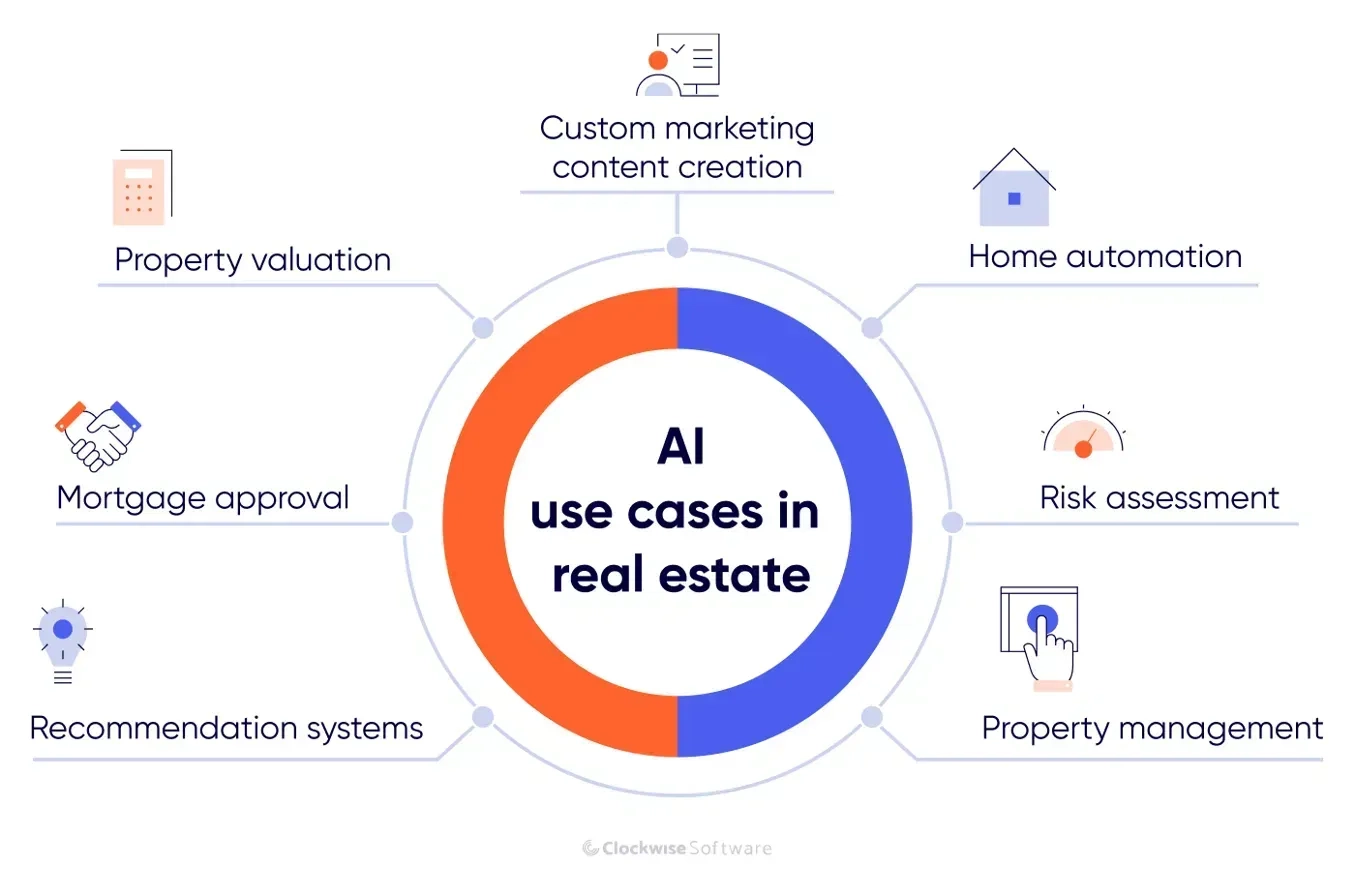
Real estate chatbots do more than answer questions. When connected to the right systems, they become the conversational layer that delivers AI-powered services directly to buyers and agents.
Here are some practical cases on how chatbots can be used in real estate:
- Property recommendations: Learns a buyer's budget, location, and preferences through conversation, then surfaces matching listings, acting as a recommendation engine that narrows hundreds of options to a relevant few.
- Instant property valuation: Connected to valuation data, the chatbot returns estimated prices on request, giving sellers and buyers a figure in seconds instead of waiting for an agent callback.
- Lead qualification and routing: Scores each inquiry on budget, financing, and timeline, then assigns it to the right agent, turning raw messages into a prioritized pipeline.
- Mortgage and financing guidance: Walks buyers through financing options and pre-qualification questions, capturing the financial context agents need before the first call.
- Viewing and inspection booking: Checks availability and confirms appointments inside the chat, removing the scheduling back-and-forth that loses buyers to faster competitors.
- Marketing and re-engagement: Sends targeted follow-ups, new listings, and open-house invitations to past leads, keeping slow-moving buyers in the pipeline.
The AI agent handling this work moves each lead through the pipeline and delivers a structured handover, so the human agent starts informed.
Are Chatbots in Real Estate Actually Useful?
The honest answer depends entirely on your messaging volume. Skepticism is valid when a chatbot simply repeats information already visible on a listing page.
- Yes, if your team handles a high volume of inquiries across multiple channels and needs to qualify, route, and follow up at a pace that manual work cannot sustain.
- No, if your inquiry volume is low and predictable. You can manage initial responses and qualification manually without losing leads to response delays.
What Should You Look for in a Real Estate Chatbot?
Not every chatbot suits property work. When evaluating one, weigh these factors against how your buyers actually behave:
- Channel coverage: Buyers increasingly arrive through WhatsApp, Instagram, and Messenger, not just your website. A chatbot that runs on WhatsApp and other messaging channels meets buyers where they already are.
- Genuine qualification, not just FAQs: Look for a bot that asks about budget, timeline, and intent, then scores the lead, rather than one that only deflects questions.
- CRM and calendar integration: Qualified leads and booked viewings should flow straight into your existing systems without manual re-entry.
- Natural conversation: The bot should answer property-specific questions fluently. A robotic, rigid flow does more harm than good.
- Smooth human handover: When a lead is hot or a question is nuanced, the bot must pass the conversation to an agent with the full context intact.
- Multilingual capability: In diverse markets, a bot that speaks the buyer's language builds trust faster and widens your reach.
A common mistake is buying the most advanced AI when what you needed was solid qualification on the right channel. Match the tool to your buyers, not to the feature list.
5 Recommended Chatbots for Real Estate
The 5 below approach property lead management in different ways, from broad omnichannel platforms to purpose-built real estate agents. Each suits a different kind of property business.
SaleSmartly
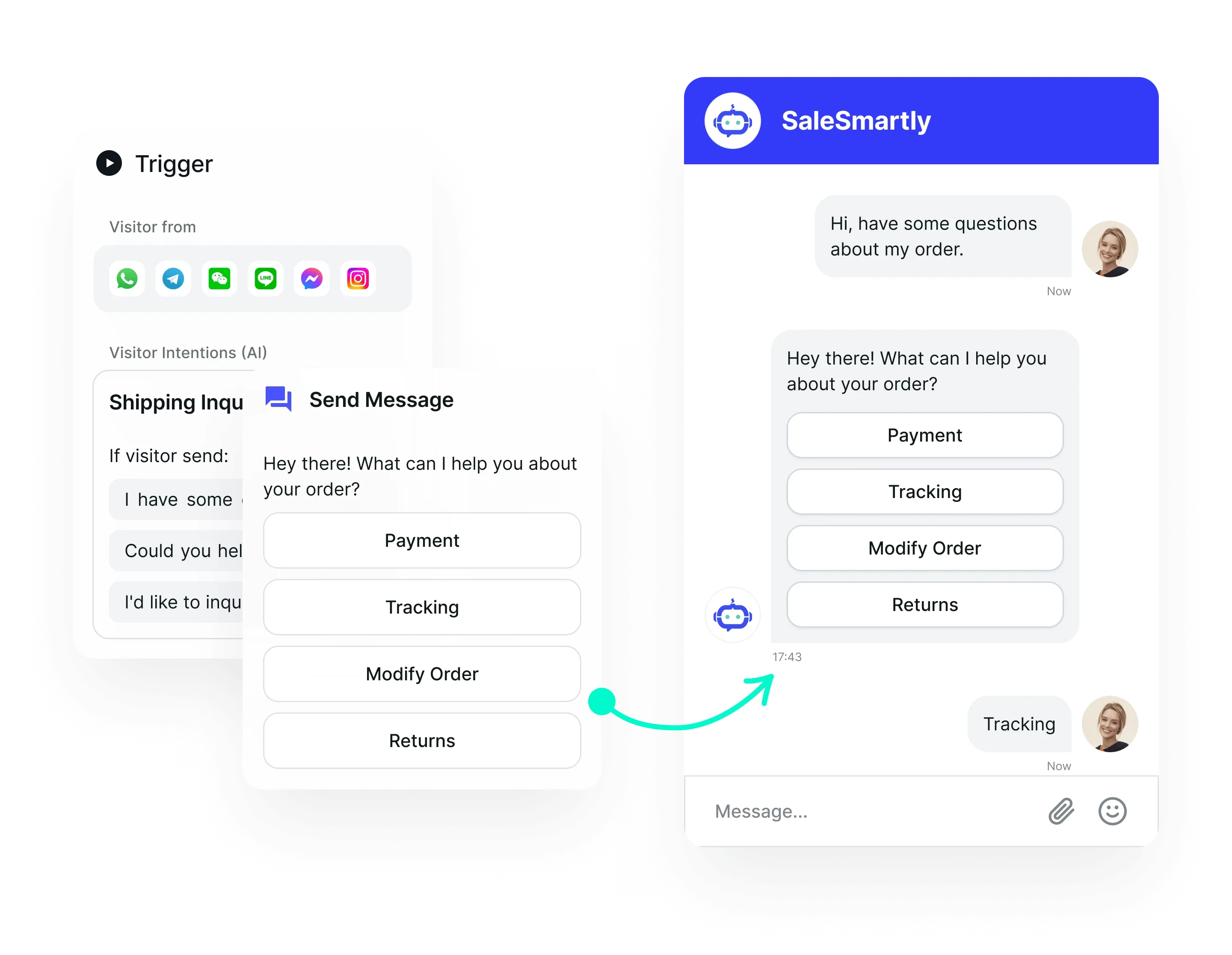
SaleSmartly is an omnichannel customer communication platform that runs a real estate chatbot across every channel buyers use, unified in one shared inbox. Rather than a website-only widget, it captures inquiries from WhatsApp, Instagram, Messenger, and more, qualifies them with AI, and routes each to the right agent. It fits agencies that generate leads across multiple channels and need one place to manage them.
- Omnichannel inbox: Captures and answers leads from WhatsApp, Instagram, Facebook, TikTok, and website chat in one view.
- AI qualification with your own model: Connect GPTBots, Coze, Dify, OpenAI Assistants, ChatGPT, or DeepSeek to qualify buyers on budget and intent.
- Automatic routing and tagging: Sends each lead to the right agent and tags conversations for follow-up.
- Real-time translation in 130+ languages: Serves international buyers without a language barrier.
- No-code automation with human handover: Escalates hot leads to an agent with the full chat history.
.webp%3Fwidth=2880%26height=2232)
SleekFlow
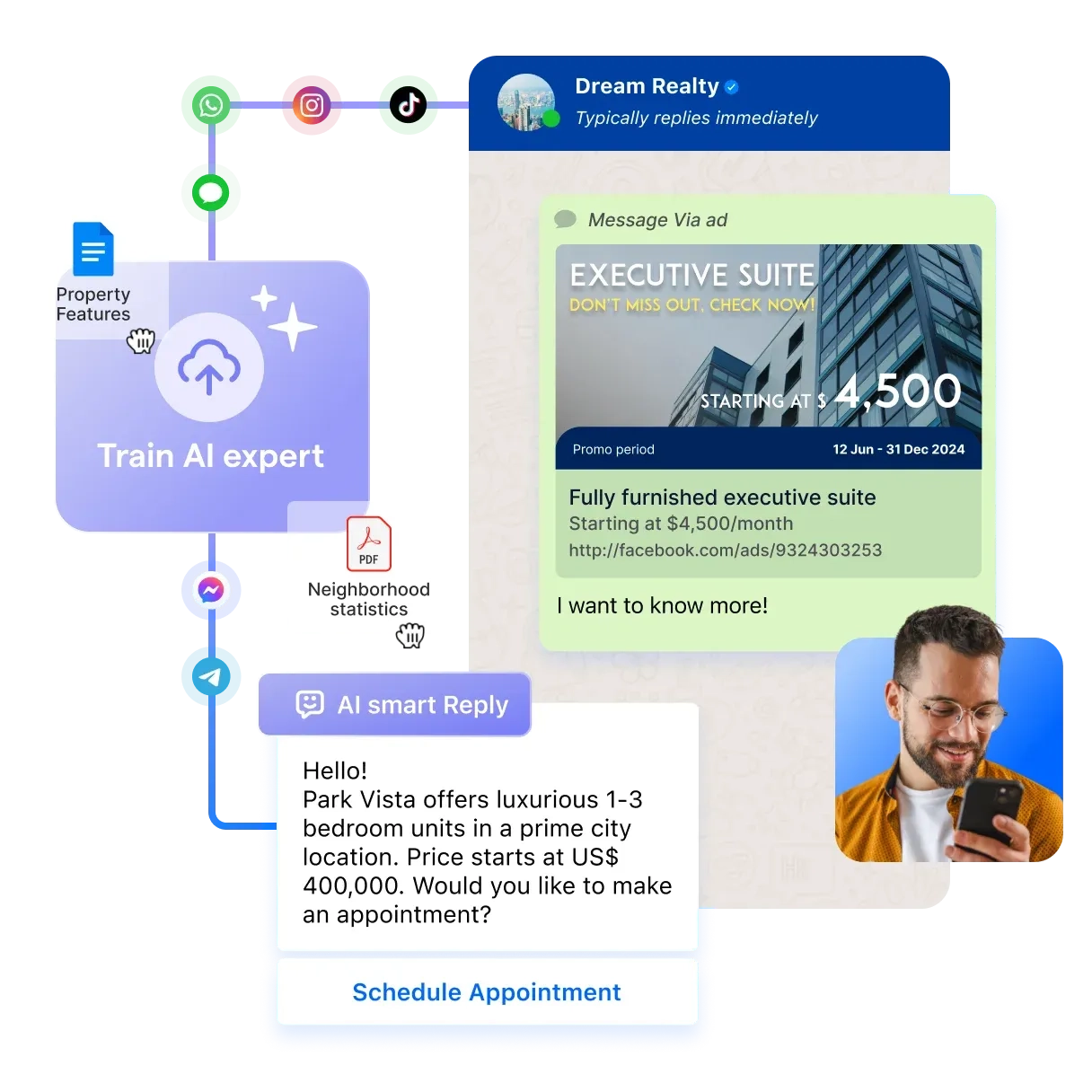
SleekFlow is a WhatsApp-first conversational platform with a solution built specifically for real estate. Trusted by major property developers, it centralizes lead data from ads, QR codes, and website CTAs, then uses AI chatbots to help buyers discover properties by location, price, size, and amenities. It suits agencies and developers running high volumes across WhatsApp and social channels.
- Property discovery chatbot: Helps buyers find listings by location, price, size, and amenities.
- Lead capture across channels: Unifies leads from WhatsApp ads, QR codes, and website CTAs.
- 24/7 booking assistant: Pre-collects viewing details and automates appointment reminders.
- Agent routing: Assigns qualified leads by expertise, team, or round-robin distribution.
Structurely
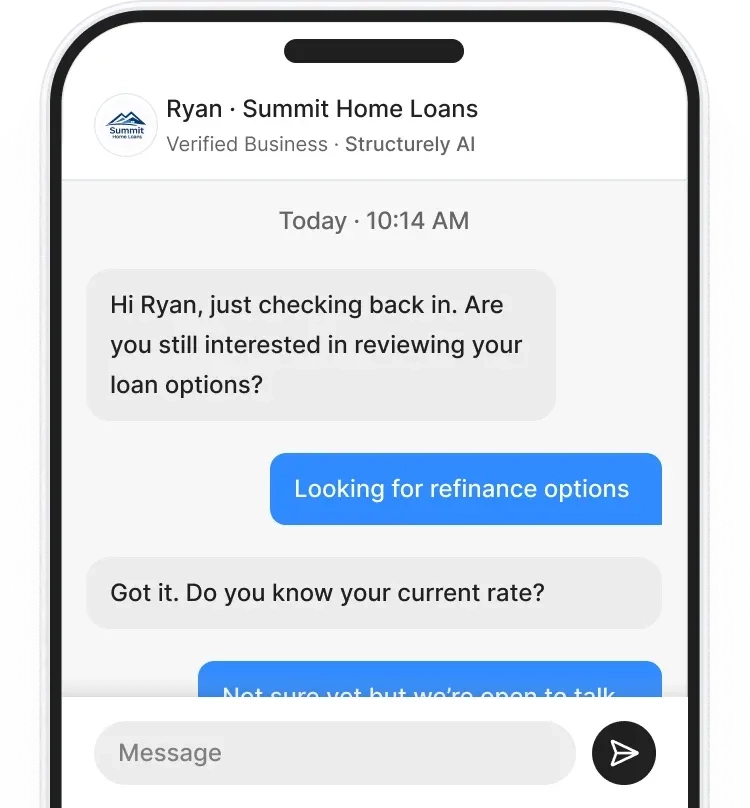
Structurely is known for long-cycle lead nurture, using conversational AI to follow up with prospects over weeks or months. Where many bots handle only the first touch, Structurely keeps working leads that are not ready yet, making it a fit for agencies with long buying cycles and large lead databases.
- Long-term nurture: Follows up persistently over extended buying cycles.
- Conversational qualification: Captures budget, timeline, and motivation naturally.
- CRM integration: Syncs conversations and lead data into your pipeline.
- Appointment setting: Books viewings once intent is confirmed.
Tidio
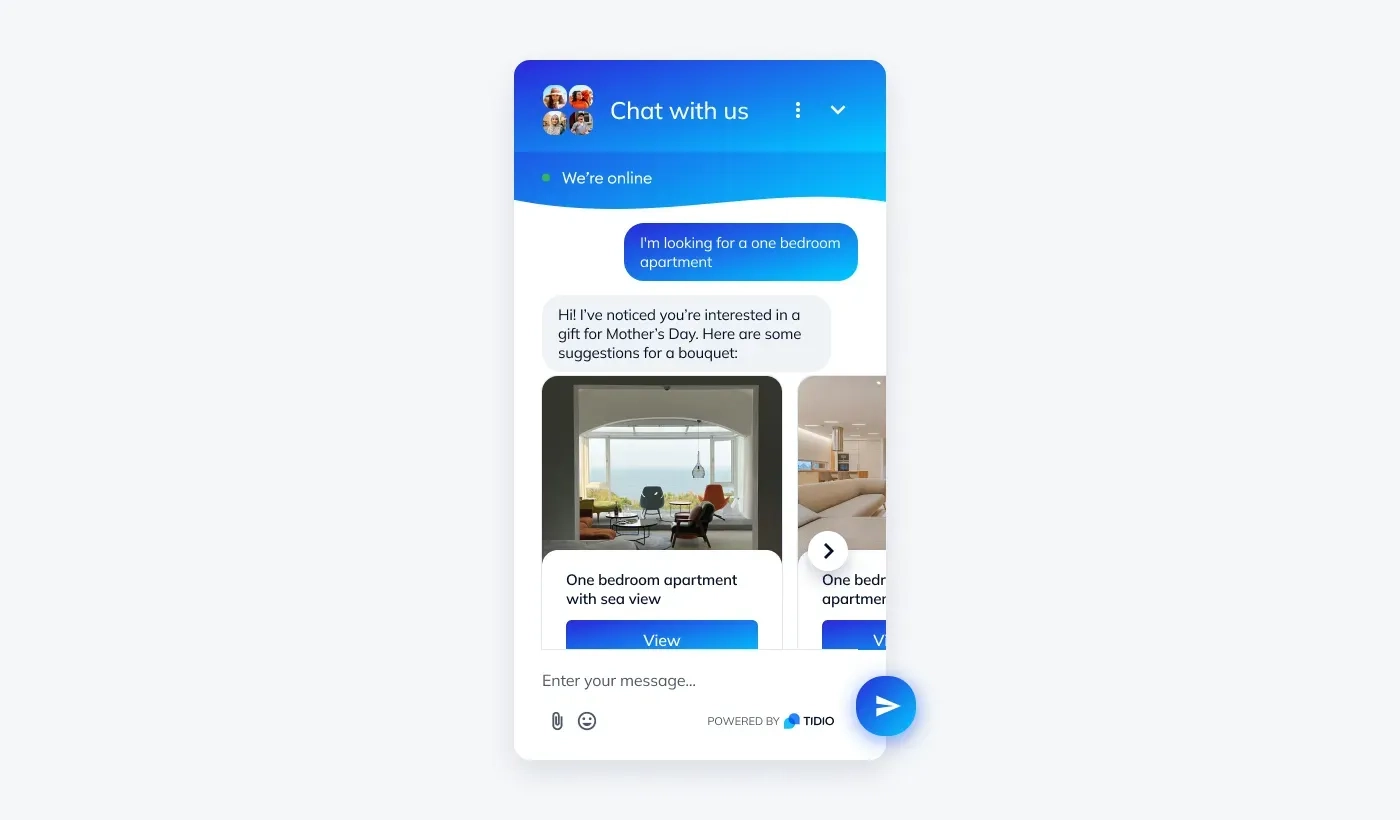
Tidio pairs live chat with its Lyro AI agent, giving smaller agencies an accessible way to add automated conversation to their website. It answers common questions from your content and hands off to a human when needed, which suits solo agents and small teams that want simplicity over depth.
- Lyro AI agent: Answers property questions from your own content.
- Live chat included: Human chat sits alongside the AI.
- Website-focused: Quick to deploy on an existing site.
- Visitor triggers: Starts conversations based on browsing behavior.
Yellow.ai
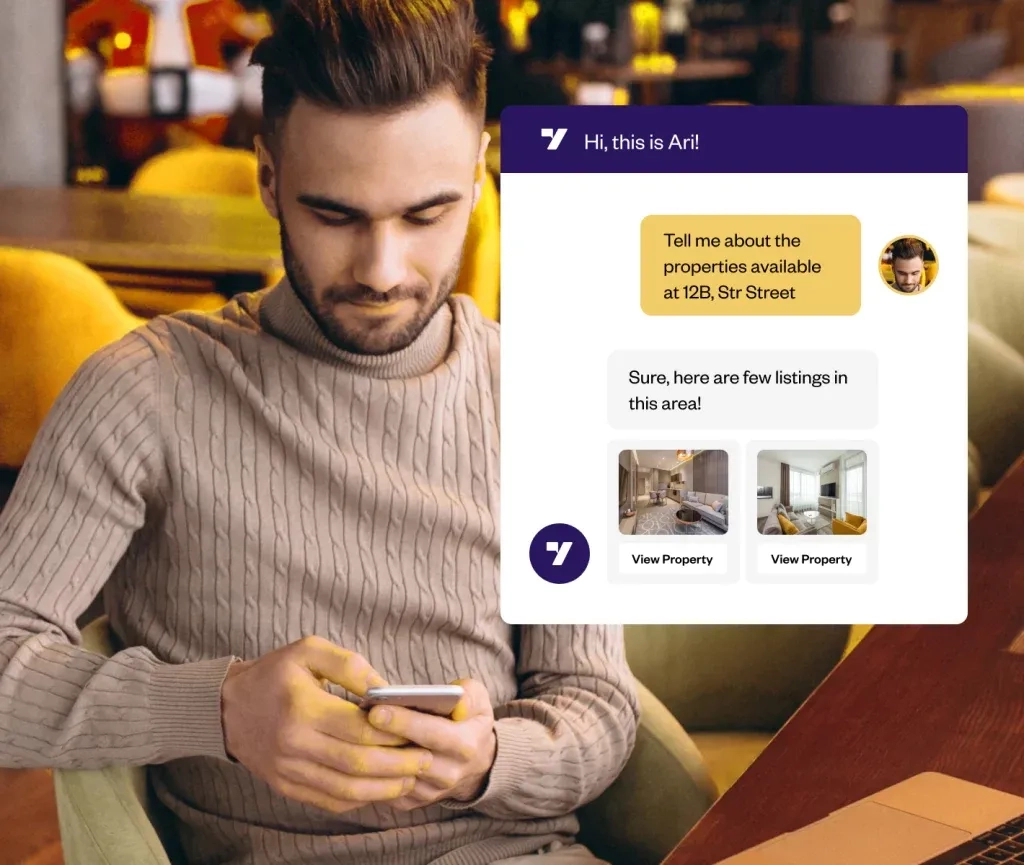
Yellow.ai is an enterprise-grade conversational platform serving large property developers and brokerages. It supports voice and text across many channels and languages, with the depth and integrations that high-volume operations require. Its capability comes with more setup, making it a fit for larger organizations.
- Enterprise scale: Built for high-volume, multi-market operations.
- Voice and text: Handles both spoken and typed conversations.
- Deep integrations: Connects across large enterprise systems.
- Multilingual support: Serves buyers across many languages.
Conclusion
Real estate chatbots deliver measurable value when inquiry volume outpaces what a team can handle manually. For agencies fielding high volumes from listings and paid ads, automated qualification and instant response directly impact lead conversion. On the other hand, for smaller operations, manual follow-up remains sufficient as a cost-saving solution.
If your business is ready to move beyond manual lead handling, contact SaleSmartly to explore the right setup for your agency.
FAQ
What is a chatbot in real estate?
A real estate chatbot is a software assistant that talks to buyers and renters automatically. It answers property questions, qualifies leads by asking about budget and timeline, books viewings, and passes serious prospects to agents. It works around the clock, so inquiries get an instant response even outside business hours.
Do chatbots actually help real estate agents close more deals?
They help most when inquiry volume is high. Because buyer intent fades within minutes, a chatbot that responds instantly and qualifies leads captures prospects who would otherwise go cold or contact a competitor. For agents with only a few leads a week, manual follow-up works fine; the value grows with volume, especially from paid ads.
Can a real estate chatbot replace a human agent?
No. A chatbot handles the first pass, answering FAQs, qualifying leads, and booking viewings, but it does not replace the human who builds trust and closes the deal. The best results come from pairing automation with agents: the bot filters and books, then hands qualified, context-rich leads to a person for follow-up.
What channels should a real estate chatbot support?
Ideally your website plus the messaging apps buyers already use, especially WhatsApp, Instagram, and Messenger. Many buyers who skip contact forms will happily reply to a chat message, and a growing share of ad leads now arrive through messaging rather than landing pages, so channel coverage directly affects how many leads you capture.
Top 10 Telegram Bots in Indonesia in 2026 (Ready-Made and Built-In)
The best Telegram bots in Indonesia for 2026: 7 ready-made bots you add in seconds, plus 3 platforms to build your own business bot.
10 AI Bots for Customer Service in Indonesia Worth Buying
Compare the 10 best AI bots for customer service in Indonesia in 2026, with features, pricing, and who each one suits, so you pick the right fit.
